Caroline Norma
Book review: Christina O’Connor, Groomed by a Gang, Mirror Books, 2023.
Whatever the sexual atrocities done to Asian[1] and African women and girls on film today, the global brotherhood sees white women as the original pornography.[2] Catharine MacKinnon writes that the first “international pornography traffic” saw “American women…violated and tortured and exploited through its use.” As a result of this historical trade, “misogyny American style [now] colonizes the world”.[3] Western men earliest turned their countrywomen into a sexual export, and signaled to the world’s male population they no longer cared about old-fashioned commitments to ‘honour’ or paternalism, not as individuals nor patriarchal states.
Western women had already seen their societies change on this basis. They got some access to labour markets, and so were more easily able to escape marriage, but they were also increasingly forced to live in deregulated societies unprotected from drugs, de-institutionalisation, harm-minimisation, pornography, and disorder. When they went abroad, for work or on holiday, they were marked as “white women”, and, on this basis, understood to be drunken, promiscuous, and unprotected targets of sexual harassment and assault. Over time, in countries like America, England, and Australia, these women and girls with their pornographic reputations came to live in societies into which increasing numbers of men emigrated.
Christina O’Connor is one of these women, born in the mid-1990s in the northern English city of Huddersfield. Luckier than (many) other girls in Western countries living as vulnerable wards of the state, she differently grew up protected and loved by conscientious parents in a lower-middle-class household surrounded by extended family. Her autobiography published in 2023 nonetheless describes her neglect and abandonment by public authorities from age 14 when her life began to have much more in common with other girls in Western societies. She attended schools that barely monitored student attendance, visited ‘family planning’ clinics that unquestioningly gave her morning-after pills when she was underage and accompanied by older men, encountered dismissive police who believed teenage girls naturally roamed the streets at night drinking, and interacted with members of the public who failed to intervene in even blatantly obvious scenes of child sexual abuse (such as when O’Connor was in the company of a group of much older men who had taken her to a motel where they had a conversation with its manager in the lobby).
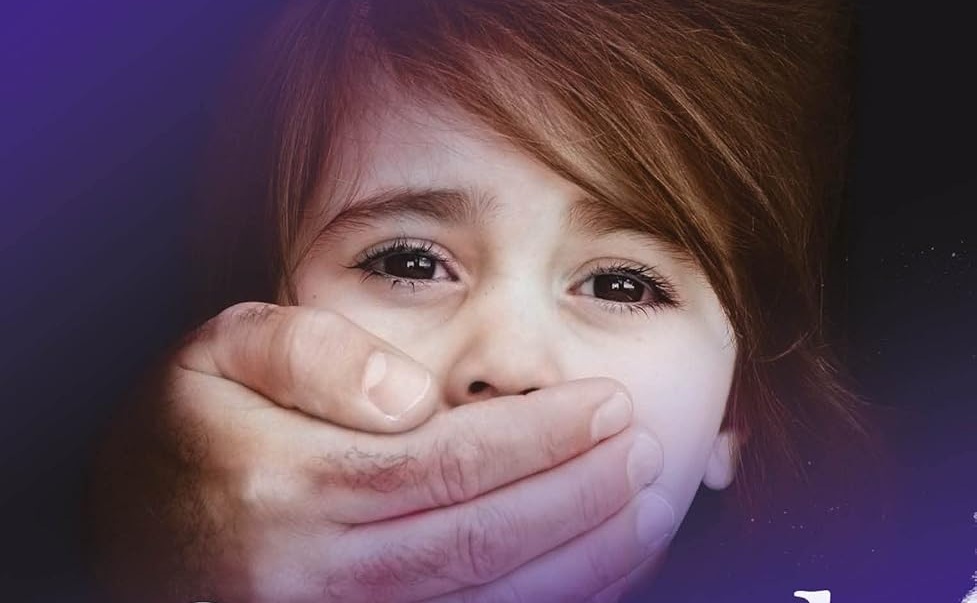
This total absence of social infrastructure supporting O’Connor as a teenage girl would have been unfortunate but unremarkable if she had not desperately needed it. But, between ages 14 and 18 she was targeted by an organisation of migrant men that drugged, pimped, and brutalised her and scores of other white teenage girls. They subjected O’Connor and other victims to extreme levels of control—the girls were pimped most nights, filmed while raped, forcibly fed large volumes of drugs, bashed, and driven to isolated locations and abandoned. They were forced to nominate each other for sex acts, and these acts were inflicted in front of rooms of people by multiple men. Some of these men did not speak English, and some were O’Connor’s dad’s age. Threats of violence for non-compliance were so extreme that girls had to strike out against parents to break out of family homes at night, and household breakdowns happened as a result. In O’Connor’s case, her mother was threatened with rape by gang members, her family home vandalised, and her parents’ cars tampered with, which caused an accident. Eventually, the men coerced O’Connor to commit muggings and property crimes, so she spent time in prison where she had to give birth to a son and raise him in his early years.
In her memoir, O’Connor makes little of either the ethnicity or the religion of her abusers. They did target her on the basis of being young and white, but of course they did: what other population in Western societies is less protected, more sexualised, and less likely to be taken seriously, and therefore amenable as victims? Western men made sure of the isolation and social degradation of teenage girls decades ago when they sold their countrywomen as pornography to the world. The world’s men, through migration and tourism, have come to reap this gift. But, different from other survivors, O’Connor’s focus is on the local people employed in public services who chose to support this betrayal of her and other teenage girls. For example, the teachers who saw her being picked up outside the school gates by her abusers, and the police officer who took a lengthy victim witness statement from her but never again got in contact. Society-wide agreement in the Western world that teenage girls are ‘child prostitutes’, unruly, strong-willed, and unscholarly left O’Connor and thousands of other victims in the UK at the mercy of men who were confident they could commit even heinous crimes against them with impunity.
Indeed, most of O’Connor’s perpetrators were left untouched by the law, even if some did end up in jail with (light) sentences. The police investigation didn’t happen till she was an adult, but, even then, she was intimidated as a trial witness by members of the gang as she walked her baby out on the streets of Huddersfield. After numerous earlier suicide attempts, she battled through two trials, but, for O’Connor, rather than triumphs, these were experiences mostly of unmanageable post-traumatic stress and secondary victimisation. The organised gangs of men still operate throughout the UK, and afterwards O’Connor had to continue living in Huddersfield with her perpetrators released back into the community, either before or after serving sentences. Some of her perpetrators never served any custodial sentences because they fled overseas. O’Connor was denied victims-of-crime compensation based on the criminal conviction she received for property crimes coerced by the gang, and she never received support or apology from public services for their failures to help her as a child.
Sheila Jeffreys highlights in her 2012 book Man’s Dominion the willingness of men in Western societies to allow migrant men to import practices of sexism and inflict them on migrant women and girls, even while the societies into which these women and girls migrate owe them the same protections as other female residents. There are certainly reports of girls suffering the same atrocities that O’Connor was put through by men of their own migrant communities.
There are women in Western societies who do buck the trend and attempt to help all of these girls. But they do so mostly as whistleblowers, and so as people ignored, disbelieved, dismissed from jobs, and generally obstructed in their efforts to assist children. These rare women who understand the condition of women and girls in Western societies as citizens deemed not worthy of even feudal forms of patriarchal protection are, along with survivors, experts who should be given powers to overturn schools, child protection systems, and policing in the West in favour of girls. For too long, people with vested interests in the sexualisation of white women and girls, and their trivilisation as underserving citizens, have been in charge of public services in Western societies. These people are mostly white men whose success as helmsmen of the liberal world has critically relied on sidelining the population close enough to be able to criticise them—over their societies built on pornography, drugs, family breakdown, and child abuse. These men have globally demonised white Western women as ‘Karens’ and the like, but, as O’Connor’s powerful memoir and other survivor stories show, it is these women who are closest, and so most dangerous, as whistleblowers of liberal social orders that function to enshrine extreme forms of male sexual entitlement as an enlightened, progressive model for the future of the whole world.
[1] Gossett, Jennifer Lynn, and Sarah Byrne. “‘Click Here’: A Content Analysis of Internet Rape Sites.” Gender & Society 16.5 (2002): 689–709.
[2] “In the 1960s and ’70s, largely white pornographers slowly began to realize the lucrative potential of playing up black racial difference, although it was not until the 1980s that interracial and black-cast porn would be recognized as a commercially viable and specialized niche market.” Miller-Young, Mireille. A Taste for Brown Sugar: Black Women in Pornography, New York, USA: Duke University Press, 2014, p. 67.
[3] MacKinnon CA (2006) Are women human?: and other international dialogues. Belknap Press of Harvard University Press, Cambridge, p. 114.
 ポルノ・買春問題研究会|国際情報サイト